Marma Chikitsa
A traditional practice of sensitivity, gentle touch and attentive learning. Explore Marma through Ayurvedic ideas of prana, with safety and personal awareness at the center.
What does marma mean?
Marma is Sanskrit for “sensitive.” In the Ayurvedic tradition, the body has 107 marma points: places approached with care because of their sensitivity and significance within that tradition.
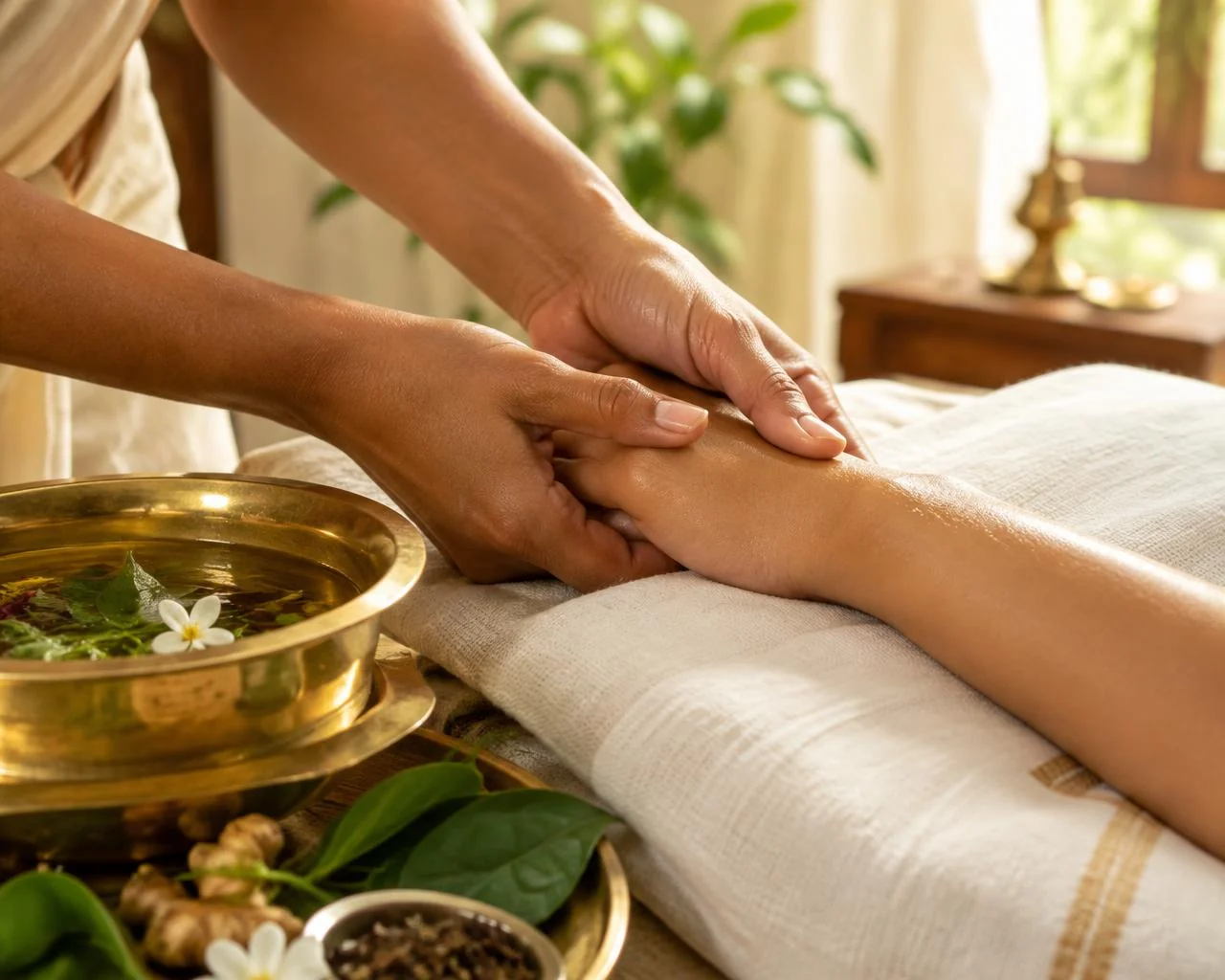
Calibrated, gentle pressure on safe points is used to support the flow of prana and may help ease discomfort. Prana is a traditional concept of vital energy; it is not a medical diagnosis or a measurable promise of an outcome.
Marma shares ideas of touch and sensitivity with other pressure-point traditions. These connections do not make the systems equivalent: each has its own understanding, methods and safety boundaries.
Gentleness before intensity
The aim is attentive, appropriate contact—not force. Learning includes knowing when to pause, when not to practice and when to seek professional advice.
The safety-breaker analogy
A gentle reset, not a forceful push.
Think of an MCB switch—the safety breaker in an electrical circuit. When flow is interrupted, a careful reset can allow the circuit to function again. Marma points are described through a similar analogy: sensitive junctions where gentle attention may support flow.
This is an illustration of a traditional idea, not a literal description of the body’s electrical systems or evidence of a medical effect.
Movement and Marma

A foundation in movement
Sookshma Vyayaam and yogic postures are understood to stimulate marma points indirectly through movement, stretch and awareness.
Begin with the whole person.
Subtle joint exercises introduce a relationship between breath and movement. Yogic postures build on that foundation, encouraging a steady practice rather than a search for isolated points.
A guided course connects these traditions gradually. You need not begin by applying pressure: observation, posture and awareness are meaningful first steps.
Explore the learning programsSafety first
- Only safe, well-known points are taught to the public.
- Vital points are never pressed directly.
- Learn under a trained teacher; do not improvise from a diagram.
- Practice first on yourself, then on family, within the guidance you have received and with their consent.
- Stop if contact is uncomfortable. Discuss medical conditions with your doctor before practicing.
- Marma is not a substitute for medical care.
A guided learning journey
For curious beginners, regular Yog practitioners and learners seeking a grounded introduction to traditional wellness. Individual suitability matters more than prior experience.
- 1
Discuss
Share your interests, prior experience and any concerns before choosing a course.
- 2
Observe
Learn the language of sensitivity, safe boundaries and the role of gentle touch.
- 3
Practice
Begin on yourself with supervised, well-known safe points and mindful movement.
- 4
Integrate
Build a measured personal practice and revisit questions with your teacher.
Learning through collaboration
Devamber Dham Institute of Vedic Sciences has an MOU with Uttarakhand Ayurved University for exchange programs and research. This collaboration reflects a commitment to dialogue between traditional learning and thoughtful inquiry.
Ask the trust for current information about exchange activities and research opportunities; participation and availability are discussed individually.
Explore Marma with care.
Begin with questions, a clear understanding of safety and a learning path appropriate to you.